
When you work with concrete, time is money. Contractors and DIY users both know that using the wrong tool slows the job and eats into profits. When you are cutting floors, walls, or sidewalks, choosing the wrong blade can cost you time, money, and performance.
Choosing the right concrete cutting blades comes down to understanding how the blade interacts with the material. If the bond is too hard, the blade can glaze over and stop cutting. If it is too soft, it wears out too quickly.
This guide breaks down blade types and real-world use cases so you can choose the right tool the first time. If you are still comparing options, you can browse our full selection of diamond blades to find the right fit for your saw and application.
1. The Anatomy of a Diamond Blade
Diamond blades do not cut like a wood saw. Instead, they grind through concrete and aggregate.
- The Core: The steel center that provides strength and stability.
- The Segment: The outer edge that contains the diamonds.
- The Bond: A metal matrix that holds the diamonds in place.
As you cut, the material wears down the bond, exposing fresh diamonds. This self-sharpening process is what allows concrete cutting blades to stay effective over time.
2. Matching the Bond to the Material
The most common mistake is choosing the wrong bond hardness. The basic rule is simple: opposites attract.
Hard Concrete (Cured)
Cured concrete is dense and tough. You need a soft bond so the blade continues to expose fresh diamonds and does not glaze over.
Soft or Abrasive Concrete (Green)
Green concrete and asphalt are abrasive. You need a hard bond so the blade does not wear out too quickly. Choosing the right concrete cutting blades for abrasive material also helps prevent undercutting, which can damage the steel core.
3. Rim Styles: Segmented, Turbo, and Continuous
The rim design affects cutting speed and finish quality.
Segmented Rim
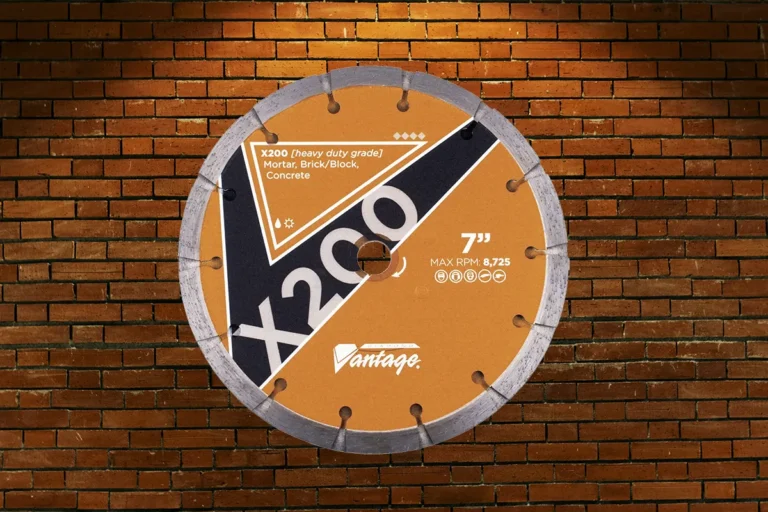
Segmented blades have gaps between sections to help with cooling and debris removal.
- Best for: Rough cutting of cured concrete
- Pros: Fast cutting speed
- Cons: Rougher finish
Turbo Rim
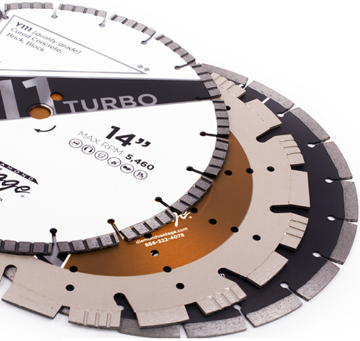
Turbo blades have a serrated edge that balances speed and finish. Many general-purpose concrete cutting blades use this design. If you need versatility across multiple materials, consider browsing all-purpose cutting blades for mixed applications.
- Best for: Brick, stone, and general concrete work
- Pros: Smoother finish than segmented blades
Continuous Rim
Continuous rim blades have a smooth edge with no gaps.
- Best for: Decorative concrete and tile
- Pros: Cleanest finish
- Cons: Requires water to prevent overheating
4. Wet vs Dry Cutting
Using water or not has a direct impact on blade life and performance.
Wet Cutting
Water cools the blade and removes slurry. This helps extend the life of your concrete cutting blades and reduces dust on the jobsite.
Dry Cutting
Dry cutting blades are built to handle heat, often with laser-welded segments. Use them for short cuts or when water is not practical.
5. Identifying Special Concrete Types
Not all concrete behaves the same. The aggregate and reinforcement matter.
Reinforced Concrete (Rebar)
Cutting through rebar requires blades designed for both steel and concrete. Look for blades rated for heavy reinforcement.
Pre-Cast Concrete
Pre-cast materials are often very dense. These require a soft bond and high diamond concentration to maintain cutting performance.
6. Calculating Cost Per Cut
Do not judge concrete cutting blades by price alone. Look at how long they last and how much work they complete.
- Standard Grade: Lower cost, suitable for occasional use
- Professional Grade: Higher diamond content and longer lifespan
A higher-quality blade often reduces total cost by lasting longer and reducing downtime.
7. Safety and Maintenance
Proper use and maintenance protect both your equipment and your results.
Directional Rotation
Most blades are directional. Always follow the arrow on the blade to avoid uneven wear and reduced performance.
Do Not Force the Cut
Let the saw do the work. Pushing too hard creates heat, which can warp the blade or damage the segments. If the blade slows down, ease off and let it cool.
Conclusion
Choosing the right concrete cutting blades means understanding the material, the bond, and the job requirements. Match a soft bond to hard concrete, choose the right rim style, and focus on long-term performance rather than upfront cost.
The right blade will cut faster, last longer, and help you get the job done without unnecessary downtime.