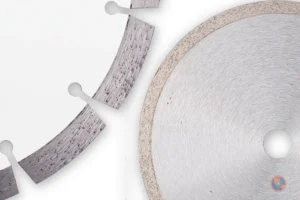
Selecting the right diamond blade for your cutting needs is a critical decision for professional contractors. Among the many types of diamond blades, two of the most commonly used are segmented and continuous rim blades. Each type is engineered for specific applications and cutting conditions, and understanding their strengths and limitations can help you choose the most efficient and cost-effective option for your project.
In this article, we’ll delve into the pros and cons of segmented and continuous rim diamond blades, providing a detailed comparison to help you make an informed decision.
What Are Segmented Diamond Blades?
Segmented diamond blades are characterized by their distinct segments, or “gullets,” which are spaces between each cutting segment. These blades are typically used in high-performance applications where fast cutting and durability are essential.
Key Features of Segmented Blades
- Segmented Design: The spaces between segments enhance cooling and reduce friction, making these blades suitable for heavy-duty applications.
- Durability: Designed for cutting tough materials like concrete, asphalt, and brick.
- Versatility: Can be used for both wet and dry cutting, depending on the blade.
What Are Continuous Rim Diamond Blades?
Continuous rim diamond blades have a smooth, uninterrupted edge, making them ideal for precision cutting tasks. They are typically used for materials where clean cuts are essential, such as tiles and masonry.
Key Features of Continuous Rim Blades
- Smooth Edge: The continuous edge ensures minimal chipping and clean cuts.
- Precision Cutting: Ideal for applications requiring high accuracy and smooth finishes.
- Wet Cutting: Primarily designed for wet cutting to prevent overheating and extend blade life.
Pros and Cons of Segmented Diamond Blades
Pros
- Faster Cutting Speeds:
- The gullet design reduces friction, allowing for faster cuts in hard materials like concrete and asphalt.
- Perfect for jobs where time is a critical factor.
- Better Cooling and Debris Removal:
- The gaps between segments improve airflow, preventing overheating and clearing debris more effectively.
- Suitable for prolonged use in heavy-duty applications.
- Durability:
- Built to withstand tough materials, these blades have a longer lifespan in abrasive environments.
- Versatility:
- Available for both wet and dry cutting, offering flexibility in different working conditions.
Cons
- Rougher Cuts:
- The segmented design can cause chipping, making it unsuitable for applications where a smooth finish is required.
- Increased Noise:
- These blades are noisier compared to continuous rim blades, which can be a concern in noise-sensitive environments.
- Less Precision:
- While effective for speed and durability, they lack the precision needed for delicate materials.
Pros and Cons of Continuous Rim Diamond Blades
Pros
- Clean and Precise Cuts:
- The continuous edge minimizes chipping, ensuring smooth and clean finishes.
- Ideal for applications where aesthetics and precision are paramount, such as cutting tiles or polished masonry.
- Reduced Noise:
- Continuous rim blades produce less noise, making them suitable for indoor or residential areas.
- Optimal for Wet Cutting:
- Designed for wet applications, these blades stay cooler and last longer during prolonged use.
Cons
- Slower Cutting Speeds:
- The lack of gullets means less airflow and slower debris removal, resulting in slower cutting speeds.
- Less Durable for Tough Materials:
- These blades are not as robust as segmented blades and may wear out faster on hard or abrasive materials like asphalt or reinforced concrete.
- Limited Dry Cutting Capability:
- Continuous rim blades are primarily designed for wet cutting and may overheat or become damaged if used dry.
When to Choose Segmented Diamond Blades
Best Applications
- Concrete Cutting: Handles dense and reinforced concrete with ease.
- Asphalt Cutting: Perfect for abrasive materials where durability is key.
- General Construction: Ideal for outdoor use or rough cuts where speed and durability outweigh precision.
Considerations
- Use segmented blades for jobs requiring high speed and long-lasting performance.
- Avoid using these blades on materials where a smooth finish is critical.
When to Choose Continuous Rim Diamond Blades
Best Applications
- Tile Cutting: Ensures smooth and chip-free edges on ceramic or porcelain tiles.
- Masonry Work: Precision cutting for decorative stone or masonry blocks.
- Indoor Projects: Reduced noise and clean cuts make them ideal for residential or commercial interiors.
Considerations
- Use continuous rim blades for jobs where precision and a clean finish are required.
- Avoid using these blades for tough, abrasive materials as they may wear out faster.
Choosing the Right Blade for Your Project
To select the appropriate diamond blade, consider the following factors:
- Material Being Cut:
- Hard materials like concrete and asphalt require segmented blades.
- Softer or more delicate materials like tiles benefit from continuous rim blades.
- Cutting Speed vs. Finish:
- For fast, rough cuts, choose segmented blades.
- For smooth, precise cuts, opt for continuous rim blades.
- Wet vs. Dry Cutting:
- If wet cutting is available, both blade types can perform optimally.
- For dry applications, ensure the blade is rated for dry cutting to avoid overheating.
- Budget and Durability:
- Segmented blades often last longer in abrasive environments, providing better value for heavy-duty jobs.
- Continuous rim blades may need replacement more frequently but offer unmatched precision for specific tasks.
Conclusion
Both segmented and continuous rim diamond blades have their unique strengths and limitations. Segmented blades excel in durability, speed, and versatility, making them ideal for heavy-duty applications like concrete and asphalt cutting. On the other hand, continuous rim blades are unmatched in precision, smoothness, and noise reduction, making them perfect for delicate materials and indoor projects.
By understanding the pros and cons of each type, professional contractors can choose the right blade for their specific needs, ensuring efficiency, cost-effectiveness, and high-quality results. At [Your Website Name], we offer a wide range of diamond blades to suit every project. Explore our selection today to find the perfect blade for your next job.
FAQs
- Can I use a segmented blade for tile cutting?
- While possible, it may cause chipping. A continuous rim blade is a better choice for clean edges.
- Are continuous rim blades suitable for cutting concrete?
- They can be used for light-duty concrete cutting, but a segmented blade is more effective for tough or reinforced concrete.
- How do I decide between wet and dry cutting?
- Wet cutting is ideal for long projects and extending blade life, while dry cutting offers convenience for smaller tasks or sites without water access.